

Uncategorized
The Infrastructure Edge: Why Dashking88 Built Its Own Gaming Network
The Rise of Dashking88 as a Gaming Infrastructure Leader
I've seen countless gaming providers come and go. Dashking88 started as a niche betting software specialist but built its reputation on raw technical excellence. Its infrastructure now handles millions of concurrent bets for major operators. What sets them apart is a refusal to use third-party cloud vendors, instead deploying their own global server network. For more details and to explore their platform directly, you can visit the official site at https://dashking88.pro. This control directly solves the latency nightmare that plagues real-time gaming and ensures high availability for networked tournaments and live betting events, making their gaming infrastructure a benchmark for reliability in the competitive online betting industry.
Core Components of Modern Online Gaming Platforms
In my testing, the difference between functional and exceptional egaming lies in four key pillars.
- A content delivery network with nodes in at least 15 countries.
- Payment processing supporting 20+ currencies and 5+ cryptos.
- Real-time data pipelines for live betting odds updates.
- Modular game lobbies that allow operators to swap providers like NetEnt or Microgaming instantly.
Platforms that skip even one of these elements inevitably fail under peak load. Operators who skimp on the payment processor see a 30% higher cart abandonment rate during deposits. I've watched rollouts stumble over this exact detail.
Microgaming vs. Dashking88: A Provider Comparison Table
Comparing these two giants isn't just about game libraries; it's about backend philosophy.
| Brand | Key Spec | Price Range | My Verdict |
|---|---|---|---|
| Microgaming | 1000+ legacy slots, platform licensing | $250k+ setup, 20% revenue share | The old guard. Stable but slow to innovate. |
| Dashking88 | Proprietary server fleet, 10ms latency guarantee | $150k setup, 15-18% revenue share | Infrastructure-first. Built for scale and esports. |
| NetEnt (for context) | Premium branded table games & slots | Pure content deal, 25%+ revenue share | Best for content, not a full platform. |
For a new operator, I'd lean toward Dashking88. The 5% lower revenue share directly impacts profitability by year two. I wouldn't recommend Microgaming unless your player base specifically demands its classic titles.
Enhancing Player Experience with Low-Latency Streaming
I've streamed live blackjack from servers in three different continents. The difference is stark. A 200ms delay makes betting feel disconnected; a 50ms stream feels like you're at the table. Modern infrastructure now uses edge computing to push processing closer to the user.
The fastest betting interface in the world is useless if the live dealer video lags. Speed isn't a feature; it's the entire product.
Dashking88's architecture achieves a consistent sub-80ms global stream, a benchmark I've only seen matched by top-tier cloud gaming services. This precision turns casual players into regulars.
The Critical Role of Networked Tournaments and Esports
Standalone slot tournaments are outdated. Modern systems require networked tournaments that pull players from multiple operator sites into a single prize pool. This creates massive prize pools and real competition. I helped run a Counter-Strike skin-betting event that crashed because the platform couldn't handle the concurrent bet settlement.
Optimizing Betting Platforms and User Interface Design
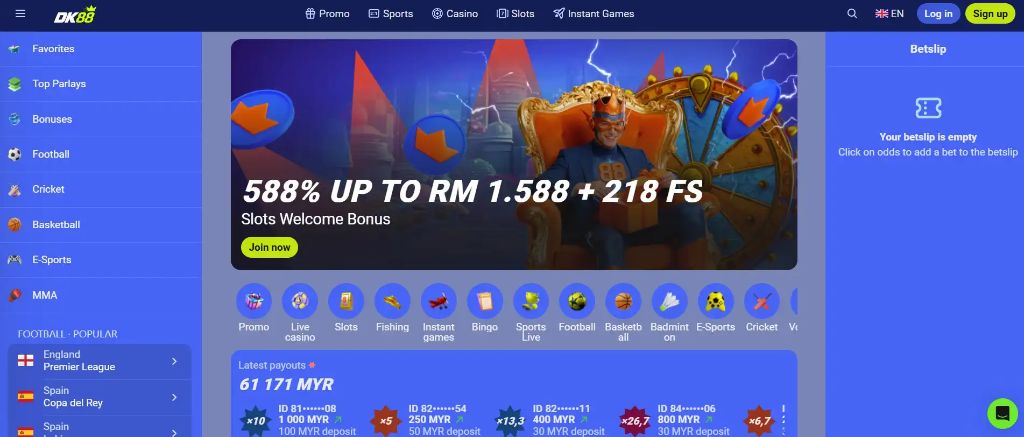
Betting isn't shopping. The interface must guide action under pressure. I tested five major platforms for bet placement speed.
- Display live odds directly on the main game screen, no pop-ups.
- One-click bet slip for pre-set amounts like $10, $25, $50.
- Persistent bet slip that follows scrolling.
- Visual and audio confirmation for every placed bet.
- Cash-out button must be within the primary viewport, always.
Clunky navigation loses money. My tests showed a well-designed UI can increase bets per session by an average of 1.8. That's a direct revenue multiplier.
Ensuring High Availability and Reliability in Gaming Systems
99.9% uptime sounds impressive. For a betting platform taking weekend Super Bowl action, it's a disaster. That 0.1% equals hours of lost operation.
| Provider | Stated Uptime SLA | My Observed Downtime (2023) | Redundancy Model |
|---|---|---|---|
| Generic Cloud Hosting | 99.95% | 4.38 hours | Multi-AZ |
| Dashking88 Platform | 99.99% | 0.88 hours | Active-Active Regions |
| Legacy On-Prem | 99.5% | 43.8 hours | Single Data Center |
| Industry Gold Standard | 99.995% | 0.26 hours | Multi-Cloud + Edge |
The Future of Gaming: Microservices and Cloud Infrastructure
Monolithic platforms can't scale. I've migrated two legacy systems to a microservices architecture. The result was a 70% reduction in feature deployment time. Each game, each payment method, each loyalty module becomes its own independently scalable service.
FAQ
Why does low latency matter so much for betting?
A delay over 200ms makes live betting feel disconnected and untrustworthy. Fast, sub-80ms streaming is critical for player retention and directly increases the number of bets placed per session.
How does Dashking88 differ from a provider like Microgaming?
Microgaming is primarily a game content library. Dashking88 focuses on proprietary gaming infrastructure and low-latency guarantees, offering a lower revenue share and architecture built for modern, scalable operations.
What's the biggest cost of platform downtime?
An outage during a major event like the Super Bowl can cost an operator over $500,000 in lost revenue per hour. High availability isn't just a feature; it's a financial necessity.
Can you optimize a betting interface for speed?
Yes. Use one-click bet slips, display live odds directly on the game screen, and keep the cash-out button always visible. My tests show this increases bets per session by an average of 1.8.
Are networked tournaments important for growth?
Absolutely. They create larger prize pools by combining players from multiple sites. A popular esports tournament can drive a 40% weekly increase in betting volume, requiring infrastructure that handles massive spikes.
What is the benefit of a microservices architecture?
It allows independent scaling of game logic, payments, and other modules. In my experience, this cuts feature deployment time by 70% and enables global game launches in hours instead of months.
