

Uncategorized
A Guide to Purchasing Stocks: How to Make Investments in the Stock Market
By purchasing stocks from various industries (you will further decrease your risk), as stocks within the same sector usually move in unison. The term initial public offering (IPO) refers to the occasion when shares are first made available for purchase. At Reink Media Group, where I hold a leadership position, we oversee multiple websites, such as ForexBrokers.com and StockBrokers.com. On Investor.gov, you can find details regarding other investment products, covering their typical characteristics and associated risks.
You don’t trade directly, you use a broker (today, an app or website) that places orders on an exchange like the NYSE or Nasdaq. When you buy a share, you own a tiny slice of that business; its forex trading in pakistan price moves with supply, demand and the company’s prospects. If you have ever searched “how to start investing” and felt overwhelmed (this beginner’s guide walks you through exactly what to do), step by step, in plain English. When buying stocks — you’ll choose how your order is executed. Both options help you start small and build over time — which is often the smartest approach for beginners.
Funds for short-term goals are generally held in an account that allows you to access the funds quickly without any tax penalties or significant fees. Some goals require use of your money in the not-too-distant future, like buying a car, a near-term down payment on a house, or the start-up costs for a small business. Many people choose to invest their contributions in a mutual fund or exchange-traded fund (ETF). Consider contributing at least that amount so you can take full advantage of your employer’s matching funds so you don’t lose out on that free money.
Ready to get started?

So, beginners should avoid stock trading or actively buying and selling stocks — especially day trading — and focus on long-term buy-and-hold investing. Generally (stock prices increase as companies expand their operations and earnings as the economy grows), making their underlying businesses more valuable. Join eToro and get access to exclusive eToro Academy content such as online courses — inspirational webinars, financial guides and monthly insights directly to your inbox. Those stock market strategies which prioritise maintaining discipline and avoiding emotional decision-making can be beneficial for all investors, including beginners.
Keep in mind (dividend investing is not mutually exclusive from buy-and-hold – in fact), it pairs perfectly with it. Dividend investing is a strategy that focuses on stocks that pay dividends – regular cash payouts to shareholders. It’s essentially “patience as a strategy.” By not over-trading — you let the businesses do the work and allow compounding to work its magic. Overall — buy-and-hold is a great default strategy, especially if you’re investing in broad index funds or a basket of strong companies.
- A brokerage account is merely the place where your investments are stored.
- The market’s daily swings are often random and driven by emotions — not the fundamental performance of the businesses you own.
- If you do want to select individual stocks to invest in (one place to start is by reviewing the company’s annual report), formally known as Form 10-K, which provides a comprehensive overview of its financials as well as a letter to shareholders.
- But before you start investing, it’s important to understand what you’re getting into.
- A savings account is a good choice for short-term goals or to hold an emergency fund that can cover unexpected expenses.
The numbers above assume no additional contributions beyond the initial $1,000. Compound growth is the process by which returns generate their own returns. The case is that, over long periods of time, owning a diversified piece of the world’s businesses has been one of the most reliable ways for ordinary people to build wealth. Over longer periods — they have consistently reflected the underlying growth of the businesses that make them up. The money raised can be used to grow the business, pay down debt, or fund new projects.
- Major exchanges (such as the New York Stock Exchange and Nasdaq), provide organized marketplaces where stock shares trade throughout the business day.
- Capital gains can be realized , when you sell and lock in the profit, or unrealized (paper gains on investments you still hold).
- This is why most beginners are better served starting with funds rather than individual shares.
- No matter your situation, here are four critical steps to take when learning how to buy stocks.
- Learning to invest in stocks can be exhilarating, yet the overwhelming variety of choices may feel akin to drinking from a firehose.
Continue Educating Yourself and Track Your Investments — Maintain Consistency
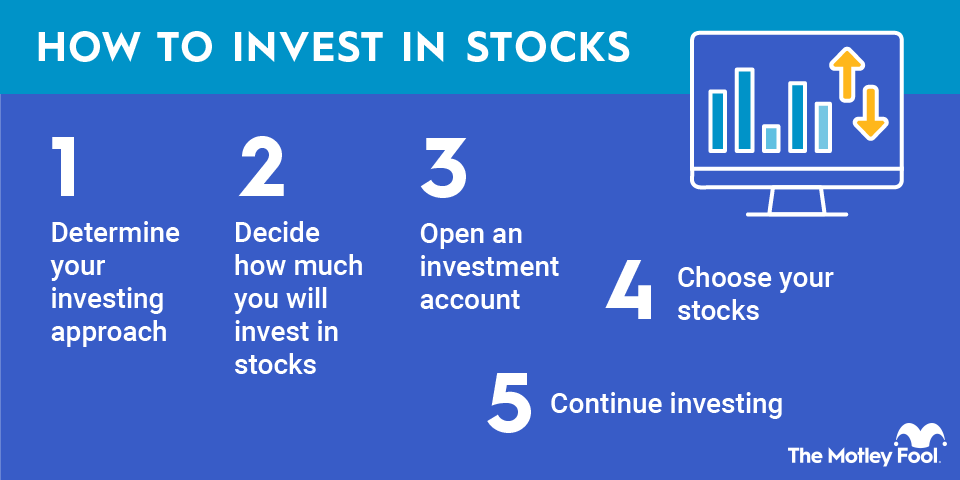
To achieve a well-rounded portfolio, think about investing in stocks from various companies in sectors like information technology, healthcare, or energy. Look into mobile applications like TD Easy TradeTM, which facilitate the easy and convenient buying and selling of stocks in both Canadian and U.S. dollars. Additionally (the platform should allow you to maintain both Canadian and U.S. dollar balances in your account), enabling the development of investment strategies that meet your objectives. A self-directed account must be established before you can commence investing. Your investment profile will be shaped by your risk tolerance (which indicates how much risk you can reasonably assume), and your time horizon, which specifies when you will need to access your funds. Adopt a more purpose-driven strategy for investing by addressing these inquiries in relation to your own financial goals and time frame.
